Ebook Free Unfair: The New Science of Criminal Injustice, by Adam Benforado
It is so easy, isn't it? Why do not you try it? In this site, you could likewise find various other titles of the Unfair: The New Science Of Criminal Injustice, By Adam Benforado book collections that might be able to help you locating the most effective remedy of your work. Reading this publication Unfair: The New Science Of Criminal Injustice, By Adam Benforado in soft data will certainly likewise ease you to obtain the source effortlessly. You could not bring for those publications to someplace you go. Only with the gadget that constantly be with your anywhere, you can read this publication Unfair: The New Science Of Criminal Injustice, By Adam Benforado So, it will certainly be so promptly to complete reading this Unfair: The New Science Of Criminal Injustice, By Adam Benforado
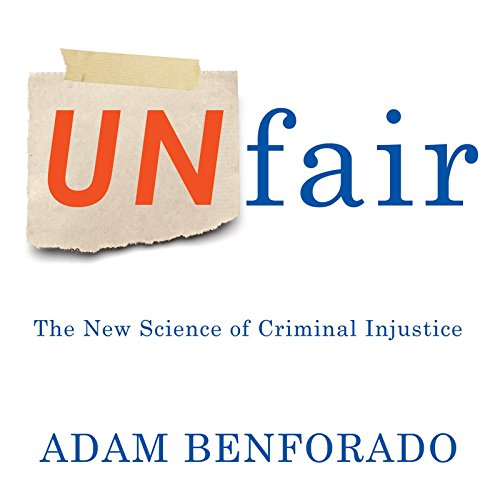
Unfair: The New Science of Criminal Injustice, by Adam Benforado

Ebook Free Unfair: The New Science of Criminal Injustice, by Adam Benforado
Unfair: The New Science Of Criminal Injustice, By Adam Benforado. Provide us 5 minutes and also we will show you the best book to read today. This is it, the Unfair: The New Science Of Criminal Injustice, By Adam Benforado that will certainly be your best choice for far better reading book. Your five times will certainly not invest lost by reading this site. You can take the book as a resource to make better principle. Referring the books Unfair: The New Science Of Criminal Injustice, By Adam Benforado that can be located with your requirements is sometime challenging. However here, this is so simple. You can find the best thing of book Unfair: The New Science Of Criminal Injustice, By Adam Benforado that you could review.
Well, e-book Unfair: The New Science Of Criminal Injustice, By Adam Benforado will certainly make you closer to what you want. This Unfair: The New Science Of Criminal Injustice, By Adam Benforado will certainly be always good close friend at any time. You may not forcedly to always complete over checking out a publication simply put time. It will be only when you have leisure as well as spending couple of time to make you feel pleasure with exactly what you review. So, you can obtain the definition of the message from each sentence in guide.
Do you recognize why you must review this site as well as what the relationship to reading publication Unfair: The New Science Of Criminal Injustice, By Adam Benforado In this modern-day age, there are many ways to obtain guide and also they will be a lot easier to do. Among them is by getting guide Unfair: The New Science Of Criminal Injustice, By Adam Benforado by online as what we inform in the link download. Guide Unfair: The New Science Of Criminal Injustice, By Adam Benforado can be a selection considering that it is so appropriate to your necessity now. To obtain the e-book on-line is extremely simple by just downloading them. With this possibility, you could check out the publication any place as well as whenever you are. When taking a train, hesitating for list, and hesitating for a person or various other, you can read this on-line publication Unfair: The New Science Of Criminal Injustice, By Adam Benforado as a buddy again.
Yeah, reading a publication Unfair: The New Science Of Criminal Injustice, By Adam Benforado can add your buddies lists. This is among the formulas for you to be successful. As understood, success does not mean that you have great points. Recognizing and also knowing more than various other will give each success. Beside, the message and perception of this Unfair: The New Science Of Criminal Injustice, By Adam Benforado could be taken and also selected to act.
Our nation is founded on the notion that the law is impartial, that legal cases are won or lost on the basis of evidence, careful reasoning, and nuanced argument. But they may, in fact, turn on the camera angle of a defendant's taped confession, the number of photos in a mug shot book, or a simple word choice during a cross-examination. In Unfair, law professor Adam Benforado shines a light on this troubling new research, showing, for example, that people with certain facial features receive longer sentences and that judges are far more likely to grant parole first thing in the morning. In fact, over the last two decades, psychologists and neuroscientists have uncovered many cognitive forces that operate beyond our conscious awareness-and Benforado argues that until we address these hidden biases head-on, the social inequality we see now will only widen, as powerful players and institutions find ways to exploit the weaknesses in our legal system. Weaving together historical examples, scientific studies, and compelling court cases-from the border collie put on trial in Kentucky to the five teenagers who falsely confessed in the Central Park Jogger case-Benforado shows how our judicial processes fail to uphold our values and protect society's weakest members. With clarity and passion, he lays out the scope of the problem and proposes a wealth of reforms that could prevent injustice and help us achieve true fairness and equality before the law.
- Sales Rank: #2478138 in Books
- Published on: 2015-06-16
- Released on: 2015-06-16
- Formats: Audiobook, CD, Unabridged
- Original language: English
- Number of items: 8
- Dimensions: 5.30" h x 1.10" w x 6.40" l,
- Running time: 600 minutes
- Binding: Audio CD
Review
New York Times Bestseller
#1 Audible.com Bestseller
A Greater Good Favorite Book of 2015
A Goodreads Best Book of the Month
A 2016 Media for a Just Society Awards Finalist
A 20th Annual Books for a Better Life Awards Finalist
A 2016 NASW Science in Society Journalism Award, Honorable Mention
A 2015 Green Bag Exemplary Legal Writing Honoree
"In this important, deeply researched debut, [Benforado] draws on findings from psychology and neuroscience to show that police, jurors, and judges are generally guided by intuitive feelings rather than hard facts in making assessments...The new research challenges basic assumptions about most key aspects of the legal system, including eyewitness memory, jury deliberations, police procedures, and punishment...An original and provocative argument that upends our most cherished beliefs about providing equal justice under the law."
—Kirkus Reviews, starred
"This book suggests that criminal justice in the United States is not a system at all but a set of dysfunctional units that deliver biased decisions that make society less safe. Benforado deftly analyzes actual cases and recent studies in psychology and neuroscience to argue for broad-based reforms...A stimulating critique of today's criminal justice system with applications to recent cases in Ferguson, MO, and elsewhere...Authoritative and accessible."
—Library Journal, starred
"...a well-documented eye-opener."
—San Francisco Book Review
"Unfair succinctly and persuasively recounts cutting-edge research testifying to the faulty and inaccurate procedures that underpin virtually all aspects of our criminal justice system, illustrating many with case studies."
—The Boston Globe
"In Unfair, [Benforado] argues that most errors in criminal justice stem from the failure to take into account the frailties of human cognition, memory and decision-making…this is a book everyone in the legal profession should read, and the rest of us too, for it is as much about the confounding idiosyncrasies of everyday behaviour as inequity in law."
—New Scientist
“Benforado makes a compelling case, backed with reference to extensive scientific research, for [his] point of view in Unfair… Over and over again, Benforado demonstrates that basic assumptions underlying the criminal justice system are not supported by scientific evidence… [He] also reminds us of how far the practice of criminal justice has drifted from its ostensible goals… He is hopeful, however, that the system can be reformed, and the information in this book is offered in part toward that end. Unfair offers an excellent overview of an important body of information.”
—PopMatters
“Benforado is part of a rising chorus of academics, politicians, and those of us who work in the criminal justice system who are appalled by the fact that this country spends $60 billion a year on prisons and boasts the dubious honor of incarcerating more persons per capita than any other nation. In Unfair, Benforado does a wonderful job of describing the scope of the problem and of thinking creatively about how we can improve our criminal justice system.”
—The Federal Lawyer
“Insightful… one of the most important books written in a very long time.”
—Douglas Blackmon, Pulitzer Prize-winning author of Slavery by Another Name; American Forum
"Benforado's book is simply chock-full of eye-opening research and practical suggestions for improvement... Hopefully, [Unfair] will push us to take a step in [the right] direction."
—Greater Good
"No one denies that the criminal justice system should be based on reason and respect for our fellow humans, but Unfair compellingly insists that to do that will require accepting some uncomfortable truths. Every lawyer and judge working in the criminal justice system should read this book. Those who take it seriously will sleep uneasily for quite some time."
—JOTWELL
"As gripping as a Grisham novel, only it isn't fiction. With captivating cases and razor-sharp science, Adam Benforado puts the justice system on trial and makes a bulletproof argument that it's fundamentally broken. This extraordinary book is a must-read for every judge, lawyer, detective, and concerned citizen in America."
—Adam Grant, Wharton School of Business, and author of Give and Take
"In Unfair, Adam Benforado makes us aware of all our many imperfections when it comes to the judgment of others in our midst. He does so gently and with astonishing knowledge. Learning so much about our subconscious biases and the judicial system that exploits them is fascinating--and deeply troubling. But he goes further: he offers obtainable solutions, ones that we should race to effect, both within our own minds and in the human fates on which we bring our minds to bear."
—Jeff Hobbs, author of The Short and Tragic Life of Robert Peace
"Adam Benforado has written a book that will make you rethink everything you believe about crime and punishment. He gracefully blends science and storytelling to make a powerful case that our failure to bring the realities of human psychology into the courtroom has led to profound injustice. Enthralling and unsettling in equal measure, Unfair might be the most important book you read this year."
—Daniel H. Pink, author of Drive
"This thoughtful and penetrating study raises many deeply troubling questions, and even more important, offers humane and very reasonable approaches to cure some of the ills of a system of 'criminal injustice' that should not be tolerated."
—Noam Chomsky, Professor Emeritus, MIT
"Systems of justice are built by human brains. As such, they're subject to all the foibles of human psychology, from biased decision-making to xenophobia to false memories. With the eye of a scholar and the ear of a storyteller, Benforado marshals the burgeoning research to illuminate the nexus between law and the mind sciences."
—David Eagleman, Director of the Initiative on Neuroscience and Law, and author of Incognito
"Unfair is beautifully written, painstakingly researched, profoundly illuminating, and deeply disturbing. As evidence mounts that our criminal 'justice' system abounds with injustices, Benforado lays bare the systemic and psychological sources of its failures, weaving together compelling narrative and recent insights from the mind sciences. Unfair is must reading for anyone who cares about justice and, more important, for anyone who does not."
—Jon Hanson, Alfred Smart Professor of Law, Harvard Law School, and Faculty Director of the Project on Law and Mind Sciences and the Systemic Justice Project
"Unfair is a beautifully written book that manages to be both engrossing and important--a fascinating blend of psychological insight, legal know-how, and compelling storytelling. If you've ever wondered why the legal system doesn't work as well as it should, Benforado's intelligent take on the relationship between human psychology and the law will enlighten you--and leave you hopeful that we're capable of doing better."
—Adam Alter, NYU Stern School of Business, and author of Drunk Tank Pink
"Unfair is an engaging, eye-opening read. By weaving together the latest findings in psychology and neuroscience with real-world stories of justice gone wrong, Unfair sheds new light on how easy it is for unconscious biases to wreak havoc on the criminal justice system and the steps that can be taken to make the system fairer."
—Sian Beilock, University of Chicago Professor of Psychology, and author of Choke and How the Body Knows Its Mind
"Unfair is an incisive look at the problems that arise in the legal system because of the way people think as well as the prospects for meaningful reform. Adam Benforado has written an engaging and masterful book on one of the most important issues society has to face."
—Art Markman, Professor of Psychology, University of Texas, author of Smart Thinking and Smart Change
"In this provocative critique of the American criminal justice system, Adam Benforado demonstrates beyond a reasonable doubt that unfair outcomes aren't tragic exceptions--they're the rule, and human psychology is to blame. Bringing together cutting-edge research with insights from real life cases, Benforado shows us how our hidden biases undermine our guarantee of fairness and equality under the law, and offers much-needed solutions."
—Philip Zimbardo, author of The Lucifer Effect
"It's surprisingly easy to look back at high-profile criminal proceedings and see the flaws, while taking the overall system for granted. Adam Benforado looks across the whole canvas, elucidating through empirical data and scientific research how our own legal structures measure up--or, more accurately, don't--to our values of justice and fairness. Criminal law in the United States is far from perfect, and Benforado's thorough, thought-provoking examination is a welcome step in identifying and preventing institutionalized injustice."
—Jonathan Zittrain, George Bemis Professor in Law, Harvard Law School
"In this fascinating book, Adam Benforado sheds new light from just about every angle on our criminal justice system. Practitioners, policy makers and everyday citizens will learn much about a subject that demands greater public debate."
—Tom Perriello, former Representative, United States Congress
"Unlike fields such as economics or philosophy, judicial theory and practice has largely ignored relevant findings about the human mind coming out of behavioral neuroscience and social psychology. This timely and important book can help us bring our criminal justice system into the 21st Century."
—Edward Slingerland, Co-director of the Centre for the Study of Human Evolution, Cognition and Culture and author of Trying Not to Try
"An admirable collection of compelling stories about what is wrong with the criminal justice system.”
—Christian Century
From the Hardcover edition.
About the Author
Coming soon...
Joe Barrett has been a working stage, screen, and recording booth actor since 1974 and an award-winning and eight-time Audie Award-nominated audiobook narrator since 1999. He also practiced law for five years-but don't hold that against him. Joe is married to actress Andrea Wright, and together they have four children.
Most helpful customer reviews
30 of 31 people found the following review helpful.
Fantastic! A Science-Based Look at Our Criminal System
By Book Shark
Unfair: The New Science of Criminal Injustice by Adam Benforado
“Unfair" is a fantastic, well-researched look at what is at the heart of our unfair criminal system. Law professor Adam Benforado has provided the public with an eye-opening gem grounded on the best current science, historical court cases and insightful research. He explores the nature of the criminal mind, eyewitness memory, jury deliberations, police procedures, and intuitions about punishment. This enlightening 402-page book includes twelve chapters broken out into the following four parts: I. Investigation, II. Adjudication, III. Punishment, and IV. Reform.
Positives:
1. A well written, well-researched book that is grounded on sound logic and good science.
2. A fascinating topic, the new science of our unfair criminal justice system.
3. Mastery of a complex topic and innate ability to educate and enlighten at an accessible level.
4. I love the tone and pace of this book. Benforado is very careful not to oversell the benefits of science while at the same time clearly showing what good research has uncovered and the shortcomings of our system. Kudos!
5. A clearly defined theme, “Injustice is built into our legal structures and influences outcomes every minute of every day. And its origins lie not inside the dark heart of a bigoted police officer or a scheming D.A. but within the mind of each and every one of us.” Intriguing.
6. Provides many interesting cases and immerses sound logic and science into each one. David Rosenbaum’s story illustrates an unacceptable chain of mistakes. “The physical disgust they felt may have generated an explanation for David’s condition that involved lack of discipline and poor character—drunkenness—rather than another potential cause: a stroke, seizure, diabetes, head injury, or drug interaction. And once the ETOH label was attached, David was in trouble.”
7. Confirmation bias and its impact to our criminal system. “Once David was labeled a drunk, the responders and medical professionals appeared to focus on finding evidence that supported that description.”
8. A fascinating look at false confessions and what leads to them. “False confessions and incriminating statements are the leading contributors to wrongful homicide convictions, present in over 60 percent of the known DNA murder-exoneration cases in the United States. More broadly, they appear to have been a factor in about 25 percent of all post-conviction exonerations.”
9. Great use of neuroscience. “Some scientists have claimed that roughly half of the variability in antisocial traits across the population comes down to the genes that people are born with. All things being equal, if you have a Y chromosome, you are several times more likely to engage in violent criminal behavior. And psychopaths and pedophiles are both disproportionately men. But it can be hard to separate out the impact of genes from social factors: after all, men and women are subjected to very different arrays of experiences and expectations.”
10. A look at how lawyers break the rules and what can be done about it. “We should worry, then, about the enormous control that prosecutors have over the state’s evidence and witnesses: they are the ones who decide if and when the defendant’s team will receive the ballistics report or the DNA report or a copy of the witness statement or the initial police write-up.” “Research suggests that the more prosecutors are focused on winning, rather than on achieving justice, the more likely they will be to act dishonestly.”
11. The role of juries. “Of course, the faith we have in our own perceptions and our cynical discrediting of those with whom we disagree can create trouble even when a jury does get to consider the case. As jurors, we are often oblivious to how our own preexisting commitments, beliefs, and biases shape our impressions, but we quickly and easily spot them influencing others.”
12. Surprising findings and tidbits used throughout the book. “Recent research suggests that a person’s weight can influence juror assessments, with male jurors more likely to reach a guilty verdict when the accused is an overweight woman than when she is thin.”
13. So how reliable is our memory? “There is, for instance, compelling evidence that eyewitness identifications are frequently inaccurate. When the actual perpetrator appears in a lineup along with several innocent fillers, witnesses fail to pick anyone out about a third of the time.”
14. The impact of race. “Research suggests that people are 50 percent more likely to make an error in identifying a person from another race, although individuals who have a lot of contact with the other race tend to be more accurate.”
15. Great stuff on separating truth from untruth. “Overall, it turns out that we are quite bad at ferreting out deception. In a recent analysis of more than two hundred studies, participants were able to identify lies and truths correctly just 54 percent of the time, only marginally better than chance.”
16. An excellent chapter on judging. “Although she was forced to retreat from her statements about how gender and ethnicity influence judging, Justice Sotomayor was right: identities and personal experiences do “affect the facts that judges choose to see.”
17. So what drives us to punish? “Indeed, there is a growing scientific consensus that it is a desire for retribution—not deterrence or incapacitation—that has the strongest influence on why we punish.”
18. A look at prison life. Ugly facts. “A country that abolished slavery 150 years ago now has a greater number of black men in the correctional system than there were slaves in 1850 and a greater percentage of its black population in jail than was imprisoned in apartheid South Africa. Black, male, and no high school diploma? It’s more likely than not that you will spend time in prison during your life.”
19. Compelling arguments on what we can do to improve our society. “The starting point of any reform comes in understanding and accepting this reality. We all need to look at the criminal justice system through new eyes. So, raising awareness about psychology and neuroscience research is critical.”
20. Notes and a formal bibliography included.
Negatives:
1. I have one main negative, the lack of links to notes. A real shame since I’m one of those readers who loves to dig deeper into the references. That being said, I’ve read and reviewed a number of books that makes references to such research and Benforado is on point.
2. Charts and diagrams would have complemented this excellent narrative.
In summary, I absolutely loved this book! It has two of my favorite subjects fused into one, where science meets our criminal system and all that it implies. Benforado won me over with his mastery of this fascinating topic, great pacing, and excellent insights and dare I say judicial use of the best of our current science. It’s been a while since I’ve read a book this good, kudos. I can’t recommend this book enough.
Further recommendations: “The New Jim Crow” by Michelle Alexander, “Uncertain Justice” by Laurence Tribe, “Thinking Fast and Slow” by Daniel Kahneman, “The Nine” By Jeffrey Toobin, “The Roberts Court” by Marcia Coyle, “Braintrust” by Patricia Churchland, “The Blank Slate” and “Better Angels of Our Nature” by Steven Pinker, “The Believing Brain” by Michael Shermer, “Subliminal” by Leonard Mlodinow, “We Are Our Brains” by D.F. Swaab, and “Are You Sure?” by Ginger Campbell.
4 of 4 people found the following review helpful.
Justice vs. The Law: Challenging the U.S. Criminal Legal System
By Matt Mansfield
This is the kind of investigation that is not going to be very satisfying, well, for a lot of people and for a lot of reasons.
Adam Benforado’s 2015 thought-provoking book, “Unfair: the New Science of Criminal Injustice,” raises many questions regarding players and practices in the U.S. criminal legal system. And ultimately, whether justice for the individual citizen is being served.
Using specific recent cases and incidents, the author explores the inherent conflict between the law as an ideal and the pragmatic practices used to manage the huge daily caseload moving through the local police bureaus, courts and prisons.
Benforado, currently an associate professor of law at Drexel University and previously a federal appellate law clerk and attorney for Jenner & Block, systematically reviews each phase of the criminal legal system using specific cases to illustrate his points at each stage:
• Part I covers Investigation: the victim, the detective and the suspect are each examined in terms of what they thought happened, how their views might be changed and some eye-opening insights about police interrogation practices and when Miranda protection might not apply.
• Part II digs into Adjudication, or the trial stage of a case, how lawyers, experts, even the judges, can impact the subconscious recall and interpretations of witnesses and juries. It is especially interesting to see how “voir dire”, the examination of potential jurors, can be manipulated.
• Part III goes into Punishment on the technical and personal levels as well as the seeming indifference of the public, once sentence has been passed, to the dehumanization of those serving time, rightly or wrongly (take a look at my April 16, 2014 Amazon review of David Dow’s “The Autobiography of an Execution” for more technical and emotional insights).
• The last section presents recommendations by the author to help reduce some of the learned and subconscious human biases that are in conflict with what we want to believe the law – and our professed ideals – should be doing, e.g. even treatment for all citizens.
The author writes in a clean, easy to follow style with some entertaining examples of older historical cases and why people may have accepted then what seems preposterous to us today. However, Benforado is making the point that we may have only changed the legal window-dressing to disguise our deeper motives for resolving conflicts with an “absolute” justified outcome.
That said, initially I found Benforado’s drawing on social science studies such as Stanley Milgram’s experiments to be helpful points for his arguments about intelligent people getting off track under certain authoritarian conditions.
However, as the narrative developed, the references seemed to be supporting a larger social view regarding the need to overcome prejudice in American society. And distracting from the main thrust, namely, how can the legal system be improved to provide justice more uniformly for all.
Perhaps it’s a little bit of both: deeper, darker personal motives distorting and justifying the pragmatism needed to execute the ideal law on a large social scale.
If you do delve into “Unfair,” and you probably should before your next jury summons arrives, I can assure you will never watch another episode of “CSI” the same way again.
And that may be a blessing.
4 of 4 people found the following review helpful.
A Book That Actually Says Something - 5 Stars, Highly Recommended
By Bradley Bevers
Simply put, one of the best non-fiction books I have read in a long time. The author has put together a fascinating book on crime, the legal actors involved, and the problems that result. As a layman, I thought that tone and pacing were near perfect and most of the material was new to me. It seems many of the applied psychology books that come out are interesting and insightful, but rarely actually say anything. This book is different - the author has an agenda and is not afraid to push it. While I don't agree with all of his conclusions and some of his recommendations seem too far-fetched, it is refreshing to read a book that actually has something to say.
Here are a few of the more interesting points the author makes:
* Eyewitness testimony, and human memory, is flawed
* False confessions are not only possible but common. Scary statistics (60% of DNA exonerations involved false or incriminating confessions).
* Why prisons don't work very well
* How everyone is biased, and what we can do about it
* How to make the court system more fair, including some radical ideas (virtual courtrooms for example)
* Damning evidence on the true unfairness of the system and who its tilted towards
With a book that is willing to jump into the fray so completely, there were some points that I disagreed with as well. The author's proposal of a shift away from blame, the belief that there is not real evil in the world, and some of his proposals (like virtual prisons) feel like a big stretch. Regardless of what you think of those things or the other proposals made, you will be forced to think and think deeply with this book.
Highly recommended.
Unfair: The New Science of Criminal Injustice, by Adam Benforado PDF
Unfair: The New Science of Criminal Injustice, by Adam Benforado EPub
Unfair: The New Science of Criminal Injustice, by Adam Benforado Doc
Unfair: The New Science of Criminal Injustice, by Adam Benforado iBooks
Unfair: The New Science of Criminal Injustice, by Adam Benforado rtf
Unfair: The New Science of Criminal Injustice, by Adam Benforado Mobipocket
Unfair: The New Science of Criminal Injustice, by Adam Benforado Kindle

Tidak ada komentar:
Posting Komentar